 Skip to content
Let’s dive into the world of the Federal Insurance Contributions Act (FICA) and explore what happens if you owe FICA taxes. Buckle up, my friend—taxes are like a rollercoaster ride, but we’ll navigate this together!
FICA Tax: What Is It?
FICA stands for the Federal Insurance Contributions Act. It’s not just a mouthful; it’s a crucial piece of legislation. Here’s the lowdown:
Purpose: FICA requires that wage earners (that’s you, me, and everyone else with a paycheck) contribute a portion of their earnings to fund two essential programs:
- Social Security: That safety net for retirees, survivors, and disabled individuals.
- Medicare: The healthcare program that kicks in when you’re old enough to appreciate early bird specials.
Who Pays?: Most employees, employers, and even self-employed folks are in the FICA club. We all chip in to keep the social safety net strong.
The Split: Employers and employees do a 50/50 dance with FICA taxes. It’s like a financial tango:
- Employers withhold a specific percentage from each employee’s paycheck.
- Employees do their part, too—contributing to both Social Security and Medicare.
The Nitty-Gritty Details
Let’s break it down further:
Employee Contribution:
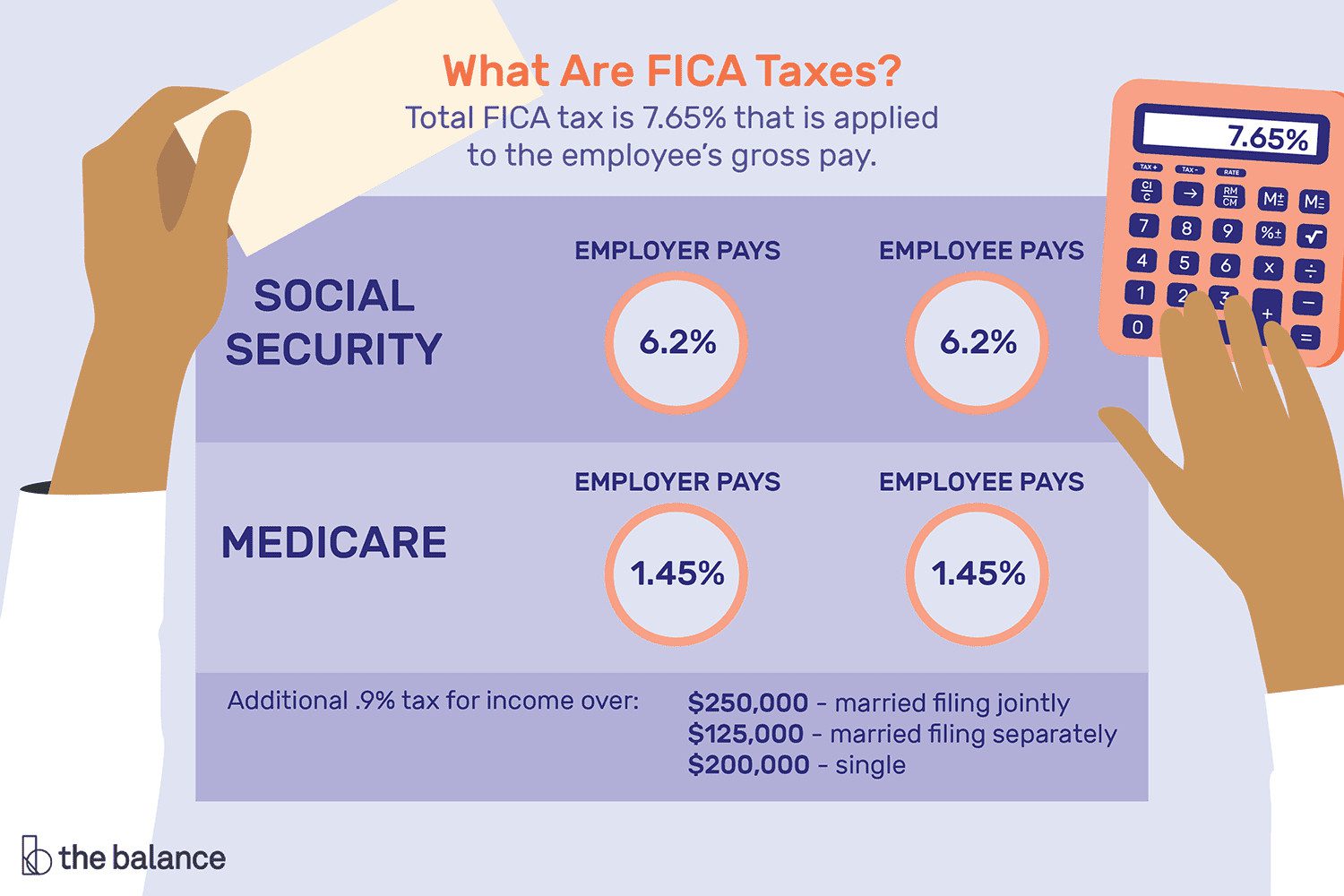
- Social Security Tax Rate: You pay 6.2% of your wages.
- Medicare Tax Rate: Another 1.45% from your paycheck.
- Total FICA Tax Rate for Employees: 7.65% (Yep, that’s the magic number.)
Employer Contribution:
- Employers match what employees pay. So, they also contribute 7.65% (because math is fair).
Self-Employed Warriors:
- If you’re self-employed, you’re a one-person show. You pay the full 15.3% yourself. No employer to split the bill with—just you, your hustle, and your quarterly estimated tax payments.
Maximums and Extras:
- The maximum Social Security tax (for both employers and employees) in 2022-2023 is $8,239.80. No cap on Medicare, though.
- Oh, and if you’re a high earner (earning over $200,000 as a single filer or $250,000 jointly), there’s an extra Medicare tax of 0.9%. It’s like Medicare’s VIP section.
What If You Don’t Pay FICA Taxes?
Now, let’s address the elephant in the tax room: unpaid FICA taxes. What happens if you owe Uncle Sam?
Employers: If they fail to collect or remit FICA taxes, they might face penalties. These range from 2% to 100% of the unpaid tax. Ouch! The IRS doesn’t play games when it comes to payroll taxes.
Self-Employed Heroes: If you’re self-employed and skip out on FICA, expect a stern letter from the IRS. They’ll want their share, and they’re persistent.
Remember, FICA isn’t just a bunch of letters—it’s your contribution to a safety net that catches us when life throws curveballs. So, embrace the tax tango, my friend!
Disclaimer: This blog post provides general information and should not be considered professional advice. Consult a tax professional for personalized guidance.
Now tell me, do you prefer the cha-cha of tax forms or the salsa of financial planning?
Learn more about FICA and your hard-earned benefits! Remember, if you ever need tax advice, I’m here!


